Phoebe Wallis, Chief Revenue Officer, Griffin
Phoebe Wallis shares insights on selling embedded banking, the importance of trust in BaaS, and why AI agents and stablecoins will reshape financial infrastructure.
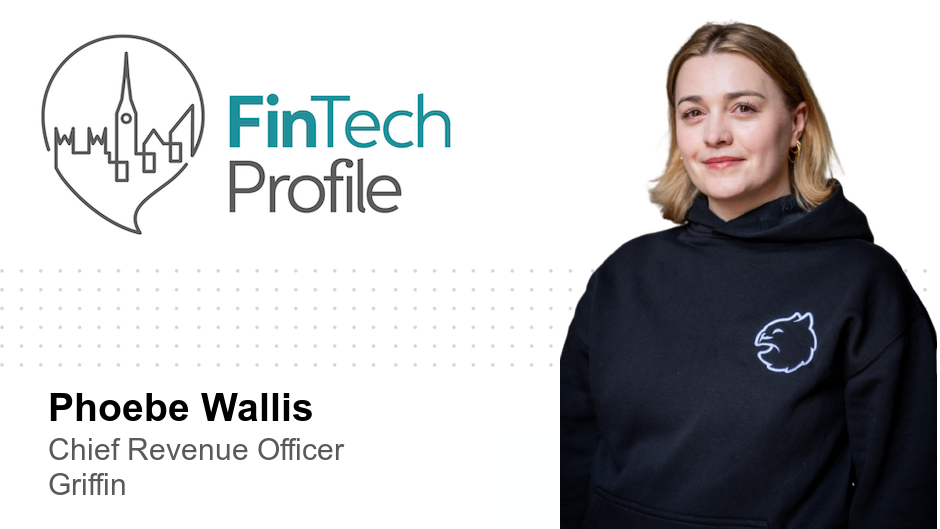
Today we're delighted to speak with Phoebe Wallis, Chief Revenue Officer at Griffin, the UK bank that powers fintechs and platforms with regulated infrastructure and APIs. With a background spanning law, capital markets, and fintech strategy, Phoebe brings a unique perspective on what it takes to build and sell embedded banking at scale. In this conversation, she discusses the realities of running revenue at a regulated bank, what's most misunderstood about BaaS, and why the next few years will be defined by AI agents and stablecoins.
My questions are in bold - over to you Phoebe:
For readers who haven't come across Griffin, how would you describe what you do - and your role in it?
Griffin is a fully licensed UK bank, but not the kind you'd walk into or download an app for directly. We're the infrastructure layer that powers financial products you might already be using without knowing we're there. The simplest way to explain it is that our customers use us to make money work where their own customers actually want it. They embed our products - bank accounts, savings, payments - directly into their own apps and platforms. Think Yonder embedding bank accounts into their credit card app, or Prosper using Griffin to power hub accounts, savings, and ISAs for their wealth management customers.
Who are you and what's your background? What route led you into fintech, and into a commercial leadership role?
My background is a bit unconventional, which I think is actually quite common in this industry. I started with a law degree, but it became clear pretty quickly that finance was where I was headed. I spent time in legal roles at Credit Suisse and Nomura, then moved into capital markets development at the EBRD, which gave me a really broad view of how financial systems work in different markets and geographies.
The role that probably shaped me most was Chief of Staff at Liberis - that chapter had me across everything: special projects, strategy, new market development, things that didn't have a job title yet. A Chief of Staff role forces you to develop a very complete picture of how a business operates, and I think that's been invaluable.
I joined Griffin before we had a banking licence. I came in as Chief of Staff, moved into strategy, then led client solutions, and now I'm CRO. The progression was really the business evolving and needing someone who deeply understood its DNA, its customers, and the commercial opportunity.
What is your job title and what are your general responsibilities day to day?
Chief Revenue Officer. Day to day I'm typically managing our sales, business development, marketing, and customer success teams. This sounds like a lot, and it is, but they're all focused on growing Griffin's revenue and making sure our customers are genuinely happy.
In practice that's a wide range of activities. Some days I'm deep in deal strategy and solution design with the sales team, working through a complex customer use case and figuring out how Griffin can best solve it. Other days it's more heads-up stuff like revenue forecasting, commercial modelling, thinking about where the next wave of growth is coming from and making sure we're positioned to capture it.
A big part of the role is also making sure everyone is working from the same picture. Internally that means keeping engineering, product, operations, the exec team, and the board informed. Externally it means being one of the faces of Griffin's commercial story. It could be with customers, partners, investors, or yes, people like you in the media. No two days look the same, which is honestly one of the things I love most.
What does running the revenue function at a regulated bank look like, compared with a typical fintech or SaaS business?
It's different in a few ways. The sales cycle is longer and more complex. You're entering into a regulated relationship so there is more due diligence involved. Customers also need to understand their compliance obligations and what the partnership means for their own risk framework.
The relationships also go much deeper. In SaaS you might have hundreds of customers where the relationship is largely transactional. On the other hand, Griffin is core infrastructure for what our customers are building.
The stakes are higher too. A mistake can have regulatory and reputational consequences. That makes the revenue function cross-functional. It slows some things down, but when we win a customer, we've done it properly.
What's most misunderstood about selling embedded banking / BaaS right now?
The biggest misconception is that it's a technology sale. It isn't. Don't lead with APIs and infrastructure jargon. Those things matter, but they won't close deals. What closes deals is understanding the problem the customer is actually trying to solve.
The second is that customers know what they want. They often don't. Someone comes in asking for accounts for their customers, and what they actually need is a much more complete solution they haven't mapped out yet. A big part of selling embedded finance is being consultative and helping customers think through their compliance obligations, flow of funds, and what they'll need at scale, not just what gets them to launch right now.
And finally, trust. Customers are handing you their regulatory exposure and their customer relationships. The bar for confidence in your infrastructure and your team is much higher than a typical SaaS sale. Your customer wants to know they can rely on you. What you're actually selling is trust and many providers don't understand that yet.
If you had a magic wand, what one thing would you change in the banking and/or FinTech sector?
More women in leadership positions. I'll like to see more women in fintech take up space at the top. The talent is absolutely there and I need the industry to do more to get them to the top. Diverse leadership makes better products, better decisions and better outcomes for customers.
Where do you get your Financial Services/FinTech industry news from?
A number of platforms. I'm typically reading any and everything because the industry moves so fast. From the FT and Business Insider to fintech centric publications like This week in fintech (TWIF), Finextra, 11:FS fintech insider and even good old LinkedIn.
Can you list 3 people you rate from the FinTech and/or Financial Services sector that we should be following on LinkedIn, and why?
There are so many people. Some of the really cool people I follow on LinkedIn are:
Simon Taylor stays on the pulse of fintech. He doesn't just share the news, the insights he adds alongside are always very useful.
Benedict Evans is one of the few really analytical voices in tech. His newsletters go deep on the shifts happening across tech and financial services and they are always worth the read.
Nick Perrett - Apart from the fact that he co-founded one of my favorite fintechs - Prosper, Nick shares really intelligent, grounded analysis on the wealth industry as a whole.
What FinTech services (and/or apps) do you personally use?
Unsurprisingly, I'm bias towards products we support. I use the Yonder credit card and Prosper for wealth management. Beyond that, I also use Blockchain.com and Kraken for crypto.
What's the best new FinTech product or service you've seen recently?
You're interviewing Griffin's Chief Revenue Officer, so I'll declare my bias upfront. MoneySuperMarket's Business Banking app, which just launched and is powered by Griffin and CountingUp. You might think it's just another business account. It isn't. With Making Tax Digital (MTD) now in effect, the tax management capabilities built into this product genuinely make life easy for sole traders and small businesses.
Finally, let's talk predictions. What trends do you think are going to define the next few years in the FinTech sector?
Honestly, I don't think this one is particularly hard to see. Definitely AI and stablecoins. Agentic finance which is AI agents initiating payments, managing treasury, processing invoices without a human in the loop is already happening. The infrastructure question this creates is new. How do you build banking systems that can safely serve a non-deterministic AI agent rather than a human? That's not a 2030 problem, it is a problem for now and the next few years.
On stablecoins, the conversation has shifted faster than many of us expected. The use cases in cross-border payments and treasury management are compelling enough that serious companies are building on them very quickly. AI and stablecoins together and you have the potential to fundamentally rewire how money moves.
Many thanks to Phoebe for taking the time to share her insights with FinTech Profile. You can learn more about Griffin on their website.