Deborah Overdeput, Chief Operating Officer, Innovative Systems
From rocket scientist to COO, Deborah Overdeput discusses financial crime prevention, the future of AI in compliance, and why institutional knowledge will be a key competitive advantage.
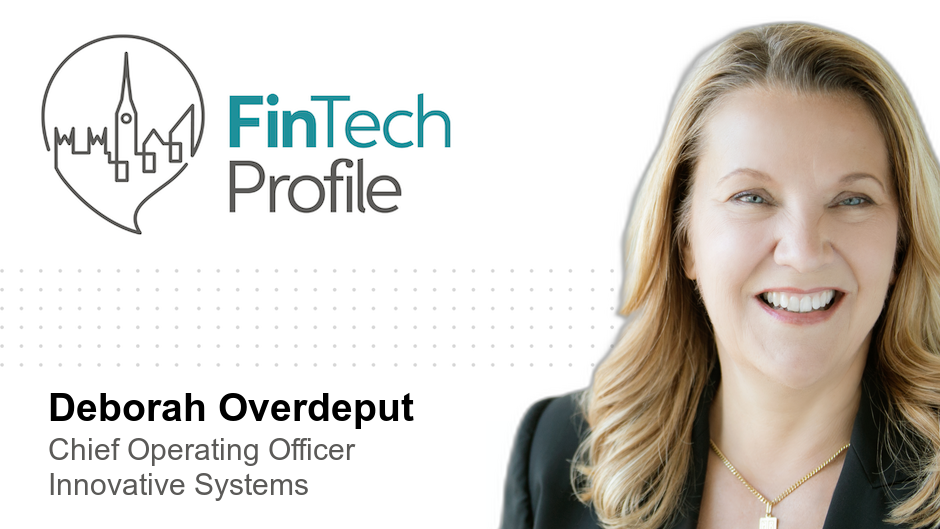
Today we're delighted to speak with Deborah Overdeput, Chief Operating Officer at Innovative Systems, a global leader in data quality, anti-money laundering compliance, and financial crime risk management technology. Deborah brings a fascinating perspective shaped by her journey from rocket scientist to executive leader, and shares insights on how AI will transform not just compliance, but how organisations preserve and build upon institutional knowledge.
My questions are in bold - over to you Deborah:
Who are you and what's your background?
I began my career as a rocket scientist after earning a degree in mathematics and computer science from the University of New Hampshire. While I loved solving complex technical problems, I discovered I was even more passionate about explaining what technology could do and the business problems it could solve than writing the code itself.
That realisation led me into financial technology and to SWIFT, where I had the opportunity to live and work in Belgium. Supporting the world's leading financial messaging network gave me a front-row seat to the complexity of global banking and the critical role technology plays in enabling secure, trusted financial transactions. It also introduced me to an industry that has challenged and inspired me throughout my career.
As my career evolved, I naturally gravitated towards roles where I could bridge technology and business. I enjoyed helping customers understand not just how technology worked, but why it mattered and how it could transform their organisations. That eventually led me into executive leadership, where I've spent more than three decades helping companies define strategy, build high-performing teams and translate innovation into measurable business results. I've always believed successful innovation begins with understanding the business problem rather than the technology itself.
Today, as Chief Operating Officer at Innovative Systems, I focus on aligning strategy, people and operations to drive growth, strengthen customer outcomes and prepare the company for its next stage of evolution. I'm also helping shape how we use artificial intelligence across our products and our own business to accelerate execution whilst enabling our people to do their best work.
Outside of my executive role, I'm passionate about leadership and developing people. I'm the co-author of Walk Away: Step Out to Step Up, a book that explores how leaders navigate pivotal career decisions with courage and authenticity.
What is your job title and what are your general responsibilities?
As Chief Operating Officer, my role is to turn strategy into results.
I work across the organisation to align our product vision, commercial strategy and day-to-day operations. That means partnering with product management to shape our roadmap, working with sales and marketing to drive growth, supporting customer success and professional services, and ensuring our teams remain focused on delivering measurable outcomes for customers.
Ultimately, my job is to remove barriers, create alignment and help the organisation deliver consistently whilst preparing for its next stage of growth.
Can you give us an overview of your business?
Innovative Systems has been helping organisations solve complex data and compliance challenges for more than 55 years.
Our flagship financial crime platform, FinScan®, helps banks, insurers, payment providers and fintechs detect and prevent financial crime whilst meeting increasingly complex regulatory requirements. Our solutions support sanctions screening, AML, customer due diligence, adverse media and real-time payments screening across both traditional and emerging payment rails.
Equally important is our heritage in customer data quality. Organisations can only make good decisions when they trust their data. Whether we're helping improve customer data quality or helping identify financial crime risk, the mission is the same: enabling better decisions through trusted information.
Financial crime isn't standing still. Payments are becoming faster, regulations continue to evolve and criminal networks are becoming increasingly sophisticated. Our role isn't simply to screen names against watchlists - it's to help customers make faster, better-informed decisions whilst reducing risk, improving efficiency and maintaining trust.
Tell us how you are funded?
Innovative Systems is a privately held company.
That independence allows us to focus on long-term innovation and customer success rather than quarterly market expectations. It gives us the flexibility to invest where our customers need us most whilst building partnerships that often span decades.
What's the origin story? Why did you start the company? To solve what problems?
Innovative Systems was founded more than 55 years ago by Bob Colonna, who recognised that organisations could only make good decisions if they could trust their data. The company's early work focused on improving the accuracy of names and addresses, helping political campaigns build more accurate voter databases and better understand the people they were trying to reach. It was an early demonstration of how trusted data leads to better decisions.
As organisations increasingly recognised the value of accurate customer information, Innovative Systems brought that expertise to financial services. The company helped many of the world's leading financial institutions build customer-centric databases that created a single, trusted view of their customers. Our data quality solutions remain in production at many of those institutions today. That longevity speaks to the strength of the technology and the lasting value it continues to deliver to financial institutions.
Today, our mission continues to evolve alongside the needs of our customers. Through our data quality solutions, we help organisations ensure customer information is accurate, complete and reliable. Through FinScan®, we help banks, insurers, payment providers and fintechs make more informed decisions around financial crime risk, sanctions compliance, customer due diligence and payments screening. In both cases, our goal is the same: helping customers make faster, more informed decisions through trusted information.
What attracted me to Innovative Systems was the opportunity to build on Bob's vision whilst helping lead the company's next phase of growth. Financial services is changing rapidly, driven by AI, real-time payments, evolving regulations and increasingly sophisticated financial crime. It's an exciting time to build on a legacy of trusted data whilst helping financial institutions solve the next generation of compliance and risk challenges.
Who are your target customers? What's your revenue model?
Our customers include banks, insurance companies, payment providers, fintechs and other highly regulated organisations around the world. They rely on us to help them manage financial crime risk, improve customer data quality and meet increasingly complex regulatory requirements with confidence.
We primarily operate through enterprise software licensing, SaaS subscriptions, professional services and long-term customer support. Many of our customer relationships span decades, reflecting the trust they've placed in both our technology and our people. We view every customer relationship as a partnership. Being responsive, accessible and committed to our customers' success has always been part of our culture, and it's one of the reasons so many organisations continue to work with us year after year.
What I'm most proud of are the business outcomes we help deliver. Customers have described FinScan as providing "exceptional accuracy for the most complex screening scenarios." Another customer shared, "We've built a great partnership with FinScan that's helped lay a foundation for our continued growth and success." Others have told us that "FinScan helped us reduce the amount of work and reviews... and dramatically increase efficiencies," whilst strengthening the transparency and resilience of their AML compliance programmes.
Ultimately, success isn't measured by the software we deliver. It's measured by the confidence our customers have in the decisions they make and the trust they've placed in us as a long-term partner.
If you had a magic wand, what one thing would you change in the banking and/or FinTech sector?
I'd eliminate the artificial divide between business, technology and compliance.
Too often, compliance is viewed as the "Department of No." I see it differently. The best compliance teams enable innovation because they help organisations move forward with confidence.
The biggest opportunities are realised when product, technology, operations and compliance work together from the beginning. When every function is aligned around solving the customer's problem, organisations innovate faster, manage risk more effectively and deliver better outcomes.
What is your message for the larger players in the Financial Services marketplace?
Technology has never been more accessible, but competitive advantage has never been harder to create.
The organisations that succeed won't simply be the first to adopt AI. They'll be the ones that build cultures capable of learning, adapting and executing faster than their competitors.
Technology will continue to evolve. Strong leadership, great people and a clear strategy will always be the differentiators.
Where do you get your Financial Services/FinTech industry news from?
I regularly follow Chartis Research, Finextra, American Banker and The Payments Association.
Equally valuable are the conversations I have with customers, analysts and industry peers. Some of the best ideas don't come from articles. They come from listening to the people solving these challenges every day.
Can you list 3 people you rate from the FinTech and/or Financial Services sector that we should be following on LinkedIn, and why?
Leda Glyptis
Leda has an extraordinary ability to challenge conventional thinking about banking transformation whilst remaining grounded in practical leadership experience. She consistently brings authenticity, fresh thinking and humanity to every discussion about our industry.
Brian Marsh, Founder & CEO, Loresse
Brian is building what I believe could become a transformative use of AI for the insurance industry. What impresses me most is that his vision isn't about replacing people. It's about combining AI with human expertise to improve decision-making, streamline complex workflows and deliver better outcomes.
Lou Maiuri
I've admired Lou's leadership from afar for many years. He has consistently demonstrated how customer focus, innovation and disciplined execution can coexist within large financial institutions. His ability to lead through change whilst maintaining a clear strategic vision is something every executive can learn from.
What FinTech services (and/or apps) do you personally use?
Like many executives, I use digital banking, Apple Pay, Venmo and online investment platforms as part of my everyday life. It's easy to take these services for granted, but they represent the incredible innovation that has transformed how consumers interact with financial institutions.
Professionally, I'm particularly interested in fintech solutions that make the financial ecosystem safer. I'm drawn to innovations that help prevent fraud, combat scams, reduce identity theft and disrupt human trafficking by making it harder for criminals to exploit the financial system. I also appreciate how major financial institutions and technology companies continue to invest in security, fraud prevention and identity protection to help keep consumers safe whilst using their platforms.
The best fintech innovations don't just make financial services faster or more convenient. They build trust by making them safer.
What's the best new FinTech product or service you've seen recently?
One of the companies that has really captured my attention is Loresse. Their vision for transforming insurance claims processing through AI is what led me to join their advisory board. Rather than replacing people, Loresse combines human expertise with intelligent automation to help experienced professionals make faster, more informed decisions, improve efficiency and deliver better outcomes for customers.
It's also consistent with my broader view of AI. I don't believe its greatest value is replacing people. I believe its greatest value is expanding human potential. AI can analyse information, identify patterns and accelerate routine work, but people bring the judgement, context and experience that turn those insights into meaningful decisions.
AI generates possibilities. Humans determine relevance.
I also believe AI will become one of the most effective ways organisations can preserve institutional knowledge. As experienced professionals retire, decades of expertise and business context are at risk of being lost. AI creates an opportunity to capture decision-making processes, best practices and organisational knowledge so future generations can continue building on them rather than starting over.
That's the kind of innovation I find most exciting because the future isn't about choosing between people and AI. It's about combining the strengths of both.
Finally, let's talk predictions. What trends do you think are going to define the next few years in the FinTech sector?
I believe the next few years will be defined less by new technology and more by how organisations choose to apply it.
First, AI will become part of everyday work. It won't be a separate application or initiative. It will become embedded in the way organisations operate, helping people make better decisions, automate routine work and focus their time on higher-value activities. The organisations that gain the greatest advantage won't simply adopt AI. They'll integrate it into the way they work.
Second, the convergence of real-time payments, AI and financial crime prevention will fundamentally change how financial institutions manage risk. Payments continue to get faster, whilst financial crime becomes more sophisticated. Organisations will need intelligent technologies that can identify risk, make decisions in real time and protect customers without creating unnecessary friction. Trusted data will become even more important because AI is only as good as the information it's built upon.
Finally, institutional knowledge will become one of an organisation's most valuable assets. As experienced professionals retire, companies face the risk of losing decades of expertise and business context. AI creates an opportunity to preserve that knowledge, capture decision-making processes and continue building on them over time. Organisations that capture institutional knowledge and continue building on it will innovate faster and adapt more effectively than those that continually lose expertise.
Technology will continue to evolve, but I don't believe the future belongs to organisations with the most AI. It belongs to those that combine AI with experienced people, strong leadership and a culture of continuous learning.
Many thanks to Deborah Overdeput for taking the time to share her insights with FinTech Profile. You can learn more about Innovative Systems on their website.