John Buttress, Founder and CEO, Fincentive
From the doorstep to the digital payslip: how one founder is bringing the 'man from the Pru' into the smartphone era for 11 million UK pensioners.
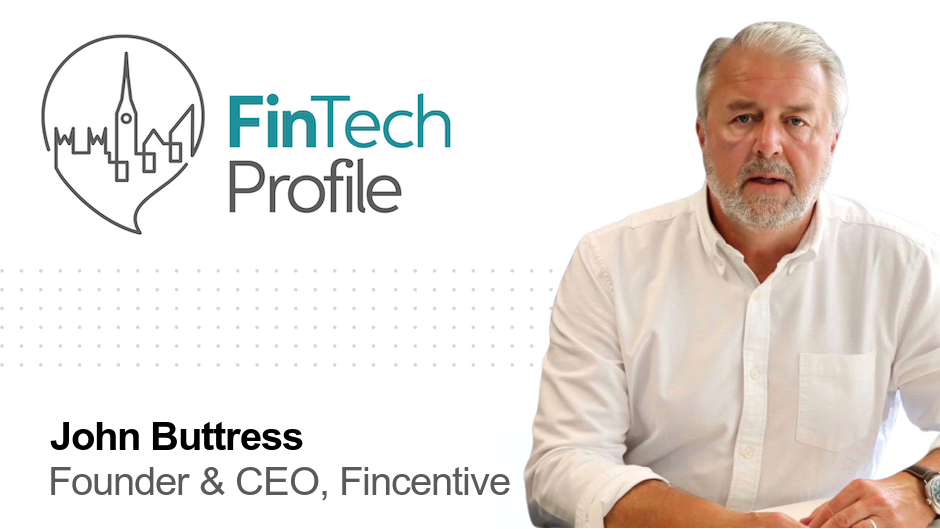
Today we're delighted to speak with John Buttress, Founder and CEO of Fincentive, a UK FinTech transforming how pension schemes communicate with 11 million people in payment. With four decades of experience spanning retail, corporate and institutional financial services, John is building a digital pension payslip that turns a silent monthly transaction into a trusted engagement channel - proving that sometimes the best innovation is remembering what worked before.
My questions are in bold - over to you John:
Who are you and what's your background?
There are a few questions at the heart of financial services that almost never change. They come from the customer. I first heard them in 1985, on the final day of a three-part Prudential training course, my first client-facing role. Their importance would not sink in for some years to come.
The course covered the products, the selling, and the agency: the patch you worked for premium collection and new business. Part of the calling, the weekly visit, was to collect those premiums in cash from people who often did not have a bank account. Some were the famous penny policies; some were larger. It was preparing us for the round: millions of British homes, visited week after week, 'the man from the Pru', a trusted local figure showing up at the right moment with the right question.
At the end of the three weeks, the instructor asked us what we had learned. Everyone in the room thought they knew everything there was to know about savings and insurance. The answers were detailed, technical, well-informed. He waited. Then cut through it. What do people actually want to know? Three things. How long do I pay? How much do I pay? What do I get back?
Forty years on, and I have not heard a better description of what the industry exists to do, or a simpler explanation of where it consistently misses the point.
This realisation came later in my career. First, the detour. Straight from the Pru I went to Norway for two years to play professional football. The offer came through an ex-West Ham contact managing a club out there. Norway is also where I met my wife, Gunn Elise. We have been together ever since.
The years that followed took me through most sides of the industry. London and Hong Kong in the early 1990s. The Isle of Man with Royal Life International, then offshore work across Africa, Europe and the Middle East. In 2004 I co-founded a fund management business in an alternative asset class that reached just under $1 billion in five years. I exited in 2010. After a few years away I was back in corporate London as Chief Marketing Officer at Punter Southall Group for eight years. Made redundant in April 2024 at fifty-nine. Not an issue, I thought, my experience would surely be valuable. Three months of CVs met with silence. The only sensible option was to back myself one more time. Fincentive was incorporated shortly after.
Looking back across my varied roles, retail, corporate, institutional, sometimes as the client, and the 1985 doorstep where it started, one pattern is hard to miss. The questions our customers ask have not changed. However, the answers have become more elaborate, more sophisticated, and steadily harder for the customer to understand.
So, forty years on, what I am building at Fincentive is an attempt to put back what the man from the Pru did. Show up at the right moment. Ask the right question. Speak the same language the person on the other side of the doorstep speaks.
What is your job title and what do you do day to day?
Founder and CEO of Fincentive.
A founder at this stage of a business does not have a job description so much as a list of the things that nobody else has been hired to do yet. That list is long. Some of it I am genuinely good at after a long career in the industry. Some of it, two years into building a company from scratch, I am still learning. The two-year version of yourself does a lot of growing up.
The work that fills the diary tends to fall into two halves. The outside half is conferences, networking, sales conversations, pitching for capital, regular conversations with investors, partnership management with Experian, and time in the rooms where the pension industry's relationships actually form. The inside half is drafting, writing, accounts, business admin, the deck, the website, regulatory paperwork, and voice and editorial.
And then there is the bit that does not fit on a slide. Conversations. Decisions. Reading the room. Asking better questions of the people around me. Most months I can name the single moment, often unplanned, that did more than everything I had on the calendar put together. This month it was the Martin Lewis ITV Pensions Special. By the time the show reached the tax treatment of drawdown, even Britain's clearest financial communicator was struggling, and most of his audience along with him. An hour of unscheduled television told me more about the problem I am working on than most of the work I had planned around it.
Tell me about your business
Fincentive is a UK FinTech built around something the pension industry has always had but never used.
Every month in the UK, 11 million people receive a pension payment. Defined benefit, public sector or annuity. The money arrives. That's it. No notification from the pension scheme that paid them. No update on their entitlements. No message of any kind.
The communication that does follow, if it follows at all, arrives once a year on paper or via a portal. It contains numbers the member already knows. The most consistent monthly relationship in financial services, between an institution and an individual, has been treated as a transaction with no accompanying conversation.
Now compare that to banking. Twenty years ago, a paper bank statement once a month confirming a balance. Today, your phone tells you the moment money arrives, what is coming up, what to look out for. The data did not change. The connection to it did.
The pension payslip never made that journey. The data was there. The connection to it was not.
And what sits in that gap is real. £5 billion a year in pensioner benefits goes unclaimed in the UK. 761,000 households are missing out on Pension Credit alone, an average of £2,121 a year each. Vulnerability that schemes cannot see. Outcomes that trustees cannot evidence. Operational costs that administrators cannot reduce. All of it sitting alongside a monthly payment that nobody used as a moment to communicate.
None of this has gone unnoticed by the regulator. The direction of travel across the regulatory landscape is consistent: understand members better, help them more, and prove it with data. The Financial Conduct Authority's Consumer Duty, in force since 2023, shifted the standard for FCA-regulated firms from process to evidence. The FCA's March 2026 review of consumer understanding was direct on the same point: the absence of complaints is not reliable assurance. The Pensions Regulator has begun to reposition scheme administration as a driver of outcomes rather than a back-office function. The conclusion the industry is being asked to reach is the same one the data has been suggesting for years.
There were reasons for the gap. Over the last decade, pension industry investment went into the new world of pensions: dashboards, apps, calculators, engagement platforms, AI tools, all built for people still saving. The old world, the 11 million in payment, was the forgotten cohort. UK over-50s control £3.9 trillion in retirement assets, and 91% of them own a smartphone. This is not a digitally disengaged cohort. It is a digitally underserved one. The trust is real and long-standing. The data on them is the cleanest in the industry. The receptivity at the moment of payment is unmatched. None of it had been put to work.
Fincentive puts it to work. Partnering with Experian, a global leader in data analytics, we turn the silent monthly pension payment into a digital communication, white labelled, arriving in the member's hand as the payment is made. Five jobs in one channel. For the member, the right information at the right moment. For the scheme, the vulnerability they can see. For the trustee, the outcomes they can evidence. For the administrator, the costs they can reduce. For the regulator, proof that the channel is doing what it should.
Or, more plainly: an industry that has been talking to the people it pays once a year, on paper, now talking to them every month, on a phone. The conversation it always could have been.
Tell me about your funding journey
Fincentive's funding journey has been short, deliberate, and slightly unusual.
The first amount of capital, and the relationship that shaped everything that followed, came from Experian. They are the exclusive UK pension payslip market partner for Fincentive. They provided non-equity funding at the start and hold an option to participate in future equity rounds. They are also our underlying technology partner. Their PayDashboard platform is the base infrastructure we are building on top of, expanding and refining specifically for the pensions industry. That structure, where one strategic partner provides funding, infrastructure and a future equity option in a single relationship, is unusual. It told us how seriously Experian were taking the opportunity, and it told the rest of the market the same.
Alongside the Experian support, we ran a SEIS round through SeedLegals to bring in a small group of UK angel investors. That round closed earlier this year. Who we wanted on the cap table mattered more than how fast we closed. Most came in by warm introduction from people who already knew the proposition. The shareholder group that has come together is engaged, brings industry credibility, and is committed to what we are building.
Looking ahead, we are starting to think about the next phase of capital, primarily to invest in the data and intelligence layer behind the payslip channel, and in the payslip experience itself, which can carry help, support and a range of services to members. Those conversations will firm up over the second half of this year. For now, the focus is on delivering the first commercial proof points that make the next round straightforward to talk about.
What is the origin story behind Fincentive? Why did you start the company?
Fincentive started with one recognition. Some of the most important parts of financial services are also the simplest. Somewhere along the way, that got harder to see. Then the pension payslip. A simple but unused channel reaching 11 million people every month at the right moment. Four decades of thinking and experience pulled into focus. We could do some real good here.
One afternoon, very early in my Pru career, I knocked on the door of a little old lady in Brighton. She had been paying into a penny policy for years and it had now matured. I had a cheque for her, just over £500. A meaningful sum to her at the time. She held it in both hands, looked at it, looked at me, went inside for a minute, came back, and pressed a £5 note into my palm. Crumpled. She insisted. She wanted to thank the man who had brought her something she was owed. I have never forgotten that moment. The premise of Fincentive, in a way I could not have articulated then, lives in that scene.
That doorstep model was a delivery system, not just a tradition. It worked because the trusted figure showed up at the moment of relevance, with the customer's context, ready to have a brief conversation. Most of what made it work has been scaled away over forty years. The bank manager. The high street branch. The person who knew you. Replaced by call centres, portals, apps, and templated letters. Some of that is progress. The relationship layer is the part the industry has not figured out how to digitise.
The pension payslip is the channel where the trust still exists, and the moment when the relationship is most live. 11 million people, every month, paying attention. What I am building is just a more modern version of the doorstep visit. The man from the Pru, in a phone.
So, the idea has been there a long time. It took four decades inside the industry, a redundancy, and a partner in Experian who was prepared to believe the proposition early on. Sometimes a company is the answer to a question you have been carrying. Fincentive is one of those.
Tell me about your customers and revenue model
Fincentive sells to the institutions that pay pensions. Mostly that means third-party pension administrators, trustees, and the in-house pension teams of insurers, master trusts and large schemes. Each of these has a different reason to care about the same channel.
For the administrator, the digital payslip is an operational layer that turns a static obligation into a dynamic service. Members get more, the administrator gets engagement data, and some of the inbound member contact, the calls and letters about tax codes, payment dates, and benefit queries, starts to handle itself, because the answer is already on the payslip when the member opens it.
For the trustee, it is the first credible answer to the question regulators are now asking. Are your members getting good outcomes? Are you seeing the vulnerable ones? Can you prove it? The honest answer to all three has been 'we hope so'. Now there is an evidence trail.
For the insurer or master trust, particularly those buying bulk annuities, it is a member experience capability that is structurally hard to build alone. The infrastructure, the data, the engagement layer, the regulatory thinking; all of that takes years to put together internally. Fincentive provides it as a partnership.
The revenue model is shaped by the channel rather than by a single product. The digital payslip can carry a range of services, from Fincentive and from the wider Experian portfolio: fraud detection, income verification, identity verification, and member tracing, among others. Each has a value to the institutional buyer and an existing transaction model. The current phase of the work is to translate those revenue streams into the right commercial shape for the pensions channel specifically, in partnership with the schemes, administrators and insurers we are working with. Some will be subscription. Some transactional. Some licensed. The exact balance will be defined by what each buyer values most.
What is already clear is the underlying economics. The cost of serving each member is small. The information value of having millions of members on a single trusted infrastructure is large. Both compound over time, in opposite directions, which is the economic logic that makes it worth building.
If you had a magic wand, what would you change about FinTech / pensions / financial services?
The thing I would change, if I could, is the assumption that runs underneath most of financial services: that people will meet the system halfway. That if you send them the right letter, with the right information, at the right time, they will read it, understand it, and act.
People do not work that way. They never have. The forms get put in a drawer. The portal does not get logged into. The call does not get returned. None of it feels urgent enough until something happens, and by the time something has happened it is too late for the form, the portal or the call to do anything useful. The industry has spent the last forty years industrialising the relationship layer away. The customer was left to fill the gap. They never did. They never will.
What financial services needs, more than another product or another platform or another regulation, is the discipline of designing for the customer who exists. The one who is busy, distracted, slightly avoidant about money, and fundamentally trusts that the institutions sending the documents have it under control. That customer is the rule, not the exception. Designing for them is not dumbing down. It is honesty.
The pension industry is the place where this matters most. 11 million people in payment. £5 billion a year in unclaimed pensioner benefits. A digitally engaged cohort that holds £3.9 trillion in retirement assets and is being communicated with as if the answer to attention is a slightly better PDF. The friction is in the wrong place, and it has been for years.
The magic wand, in practice, would be small. Not a new regulation. Not a new technology. A shift in starting assumption. Treat every communication as something the customer might never read, and design accordingly. The man from the Pru had this right for a century. The industry then spent forty years building a system that did not need the role. The magic wand is the discipline to remember why it worked.
What's the one thing you would say to the C-suite of a major bank, insurer or asset manager?
If I had the C-suite of a major bank, insurer or asset manager in the room for ten minutes, I would not start with technology or regulation. I would start with what they spend on customer engagement.
The numbers are large. Millions every year on advertising, campaigns, behavioural research, communications redesigns, customer journeys, data analysis, retention. All good, mostly. All well-intentioned. And almost all of it operating on the same assumption: if we put the right message out into the world, often enough and well enough, eventually the right customer will see it at the right moment.
Sometimes that is what happens. Most of the time, it is not. The message lands when nobody is paying attention. The attention arrives when nobody is sending a message.
Forty years of behavioural science explains why. From Thinking, Fast and Slow onwards, the picture is consistent. People process the world in two modes. The fast one decides in three seconds whether something deserves attention. The slow, analytical mode only engages if the fast one waves it through. Most financial communications are written for the slow mode and arrive long after the fast-mode window has closed. Sophisticated, thorough, expensive, and invisible.
Attention cannot be manufactured by spending more on it. It is triggered. The most reliable trigger in any consumer relationship is money arriving in an account. Banking notifications prove this every day. The 'you've been paid' alert is the most-read communication a bank sends. Not because it arrives when the customer is paying attention. Because it creates the attention. Money arriving is a hardwired trigger: an exact amount, from a trusted source, to you, right now. The fast mode fires automatically. The alert is what the customer turns to. Pensions have the same trigger, 11 million times a month in the UK. And almost none of it is being used as a moment to communicate.
This is not a pensions question. It is a payment-moment question. Every large financial institution sees the same trigger in different forms: salaries, payslips, pensions in payment, annuities, regular investment income, insurance benefits. Each one is the same moment of customer attention. Most of it is going unused.
The Pru distilled this observation a century before the science had names for it. Customers want to know three things. How long do I pay? How much do I pay? What do I get back? In modern financial services those translate into a wider set: where is my money and what is happening to it; what does it really cost me, all in; how secure is what I am being promised. The shape of the answers has become more sophisticated. The shape of the questions has not.
The message to the C-suite is that the moment of fast-mode attention is not something you have to manufacture. You already have it, in your hand, every month, with every customer you pay. The choice is whether to use it.
Where do you read your daily news?
Mostly the pensions trade press. Pensions Age, Pensions Expert, Professional Pensions, Corporate Adviser, plus an aggressive set of Google Alerts that surface anything else relevant before I have to go looking. LinkedIn does most of the rest of the day-job reading; the right people share the right things, and what does not surface there usually was not worth the click.
For wider thinking I read around behavioural science. The classic work, the more recent applied research from places like the Behavioural Insights Team, and anything that helps explain why people respond the way they do to communications about money. It connects directly to what Fincentive is trying to do, but I started reading it long before that and would still be reading it now. Most of what is wrong in financial services communications is, in the end, a behavioural problem. Most of what could be right is too.
I should probably read more FinTech press than I do, and I am honest about that. I am the kind of founder who reads the customer side first and the technology side second, which is sometimes a useful corrective and sometimes a blind spot.
The rest is unrelated to work. BBC News and BBC Sport, particularly anything to do with Brighton and Hove Albion, who are the team I have followed since I was a child. North Stand Chat, the Albion fan forum, which is the most useful and unexpectedly diverse online community I have come across; the football is the front door but the threads about local restaurants, Brighton life, and everything else are why I keep going back. Condé Nast Traveller for holiday and hotel ideas, which has been the same source for almost as long as I have been working.
Most of what I read for work is in tabs by 8am. Most of what I read for myself is on my phone in the evening. The two probably influence each other more than I realise.
Three people we should be following on LinkedIn?
Three to follow, each for a different reason.
- Guy Opperman, former UK Pensions Minister and now a senior adviser to multiple organisations. The reason to follow him is that he tells it how it is. People with that level of public profile in the pensions world often hedge on most things. Guy does not. Whether or not you agree with him, you know what he thinks, and that is rare enough in this industry to be worth your attention.
- Vasily Alekseenko, founder of Rare Founders, one of the UK's largest startup communities. One of the more honest voices on LinkedIn about what running and funding an early-stage business feels like, and the community around him is full of others doing the same. He is also raising capital while building it, which means his writing carries the weight of someone living the journey rather than teaching it. The polished versions of the founder story are easy to find. The honest ones are not.
- Rory Sutherland, vice-chairman of Ogilvy and one of the most readable voices in applied behavioural economics. If you ever want to understand why financial communications fail, why people ignore things that are good for them, and why simplicity beats sophistication more often than much of industry would like to admit, his writing is the place to start. I read him for the same reason I named behavioural science as wider reading. The questions he asks are the right ones.
What FinTech apps do you actually use?
Banking: traditional and challenger. I keep an account with a high street bank for the things that need to happen there, and a Starling account that comes with me on holiday because their handling of foreign exchange and travel is genuinely better than the alternatives. PayPal still gets used more than I would have predicted ten years ago. Apple Pay is the one I default to in person, to the point that I rarely carry cash or a wallet. Slightly risky, if I lose my phone, but it has not happened yet.
For investments I use AJ Bell, which has been my main platform for years.
Microsoft for email and calendar, Teams for online meetings. HubSpot for CRM. SeedLegals for cap table, SEIS, and the legal scaffolding of a small company. Lovable and Claude, used together, build the website and the interactive decks. None of these are strictly FinTech, but they are the apps that make the work happen.
If there is a pattern, it is that I lean toward what works rather than what is novel. The shiny new thing must earn its place on the home screen. Some do.
Best new FinTech product or service you've seen recently?
The most impressive thing I have seen in the last twelve months is not a single FinTech product. It is what AI has done to the cost and capability of running a small business.
Specifically, Claude and Lovable. The combination is doing things that, three years ago, would have taken a creative agency, a development team, and a budget. Most of what I am building now, the website, the decks, the prototypes, the structure of the proposition itself, gets transferred from my head into something usable through AI. As someone who does not code, this has changed what I can do alone. In my CMO role at Punter Southall, I would have spent many thousands of pounds on agencies and website builds for things I now achieve for under £200 a month.
The wider point is that financial services has had a great deal of useful technology built for it over the last decade. Investing apps, banking apps, account aggregation, the whole modern payments stack. Most of it works well. The cohort that has been left behind is the one in retirement, and that gap is now genuinely strange. The same tools that have made everything easier for people still earning have hardly touched the people already drawing what they have saved. That is what we are changing.
And on the AI point, after months of working with Claude on Fincentive, sometimes I think it knows more about the company than I do.
Predictions for the next few years
Three predictions, each more confident than I would have been five years ago.
The first is that the retirement cohort, the 11 million people I have been talking about, becomes the major investment focus for the financial services industry over the next five years. The demographics, the wealth, the regulatory pressure, and the technology have all moved into alignment at roughly the same time. The accumulation cohort got two decades of innovation. The decumulation cohort will get the next one.
The second is that the pension payslip, in some digital form, becomes the standard communication channel between the institution and the pensioner within five years. Probably sooner. Once one major scheme or insurer does it well, the rest will follow, because no trustee or board will be willing to explain why they are not. The shape of the answer in this market is clear once you see it. The competitive question is who builds it, and on what infrastructure.
The third is that the regulator, gently at first and then more firmly, will start to require evidence of engagement rather than evidence of communications having been sent. The Consumer Duty trajectory is already pointing this way for FCA-regulated firms. The Pensions Regulator will follow. The bar will move from "we sent the right document" to "did the customer see it, understand it, and act on it where they should". That is a different system, and most schemes are not yet built for it.
Underneath all three, the same thing is true. The customer at the end of these systems has not changed. The technology around them has. The regulator's expectations have. The competitive pressure is starting to. The institutions that adapt to that and start communicating like they did when the man from the Pru came round will end up with the relationships that matter.
Many thanks to John for taking the time to share his insights with FinTech Profile readers. Find John on LinkedIn and read more about his company at fincentive.co.uk.