Kristiina Kikajoon, Director & Forensic Investigator, Crypto Legal
Kristiina Kikajoon discusses blockchain forensics, cryptocurrency fraud investigation, and the intersection of digital assets with traditional financial services.
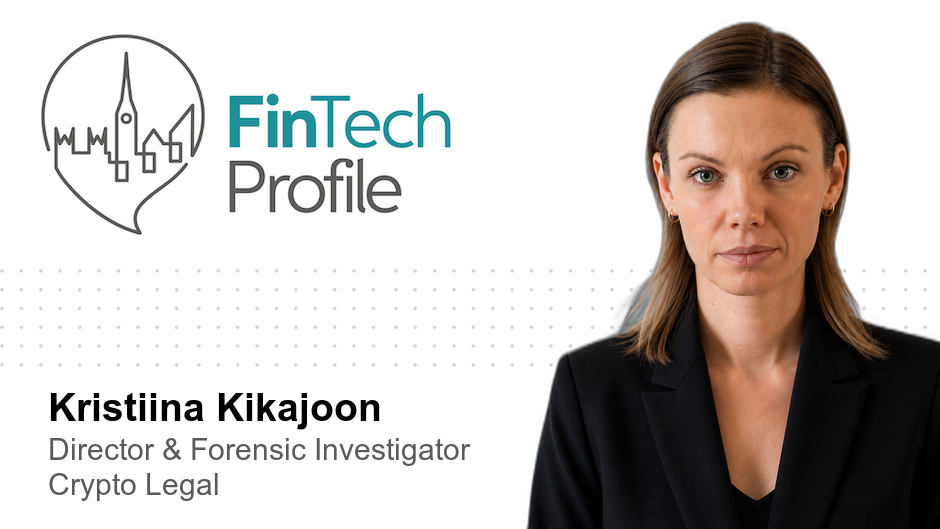
Today we're delighted to speak with Kristiina Kikajoon, Director & Forensic Investigator at Crypto Legal, a multi-award-winning international law firm specialising in blockchain technology and digital asset investigations. As cryptocurrency fraud and digital asset complexity continue to challenge traditional investigative methods, Kristiina shares insights on building specialist forensic capabilities, the role of AI in financial crime prevention, and the future convergence of traditional finance and digital assets.
My questions are in bold - over to you Kristiina:
Who are you and what's your background?
My professional background has been centred on financial investigations, regulatory compliance, and digital asset tracing. As cryptocurrencies gained widespread adoption, it became evident that traditional investigative techniques alone were no longer sufficient to address the complexities of blockchain-enabled financial crime.
Recognising this shift, I specialised in blockchain forensics and digital asset investigations, combining blockchain analytics with financial intelligence and legal strategy to investigate cryptocurrency fraud, trace digital assets, and support compliance efforts. Our work has involved assisting individuals, businesses, financial institutions, and cryptocurrency service providers in navigating the increasingly complex intersection of blockchain technology, regulation, fraud prevention, and asset recovery.
At Crypto Legal, we have focused on developing robust forensic investigation methodologies that integrate blockchain intelligence, financial analysis, open-source intelligence, and legal expertise. As Director, I oversee investigations involving cryptocurrency fraud, blockchain tracing, compliance, and digital asset intelligence, working closely with our legal, forensic, and technical teams to support clients across multiple jurisdictions.
What is your job title and what are your general responsibilities?
I am the Director at Crypto Legal, where I oversee our forensic investigation and blockchain intelligence operations. My responsibilities include supervising investigations involving cryptocurrency fraud, digital asset tracing, blockchain intelligence, compliance, and financial crime, while ensuring that our investigative methodologies remain technically robust and legally sound.
I work closely with our multidisciplinary team of lawyers, blockchain forensic specialists, compliance professionals, and investigators to coordinate complex cross-border matters involving digital assets. This includes overseeing blockchain tracing exercises, analysing transaction flows, identifying potential points of intervention, supporting regulatory and compliance matters, and ensuring that our forensic findings meet the evidential standards required by law enforcement, regulators, and other relevant authorities.
A key part of my role also involves driving the continued growth of the company and developing strategic partnerships with leading experts and organisations across the blockchain, legal, forensic, compliance, and cybersecurity sectors. By collaborating with trusted specialists, we are able to strengthen our capabilities, expand our expertise, and ensure that we continue to provide the highest standard of service and the most effective solutions for our clients.
Can you give us an overview of your business?
Crypto Legal is a specialist legal and forensic firm dedicated exclusively to blockchain technology, cryptocurrencies, and digital assets. We provide a comprehensive range of services, including blockchain forensic investigations, cryptocurrency tracing, fraud analysis, digital asset intelligence, compliance and AML advisory, wallet attribution, exchange engagement, and support in complex cryptocurrency-related disputes.
Our clients include private individuals, businesses, financial institutions, cryptocurrency exchanges, blockchain projects, and professional service firms operating across multiple jurisdictions.
What distinguishes Crypto Legal is our multidisciplinary approach, combining legal expertise with advanced blockchain forensic capabilities. Cryptocurrency investigations require far more than an understanding of the legal framework. They also demand in-depth technical knowledge of blockchain networks, transaction analysis, decentralised finance (DeFi), cross-chain bridges, cryptocurrency mixers, exchanges, smart contracts, and wallet attribution. By integrating legal and technical expertise, we are able to provide practical, evidence-based solutions to complex digital asset matters.
Over the years, our work has been widely recognised within the legal, blockchain, cybersecurity, compliance, and digital asset sectors. Crypto Legal has received more than 70 industry awards and professional recognitions, reflecting our commitment to technical excellence, innovation, and maintaining the highest professional standards.
As blockchain technology and digital assets continue to reshape the global financial landscape, we believe that specialist expertise in blockchain forensics, regulatory compliance, and digital asset will become increasingly important in helping individuals and organisations navigate this rapidly evolving sector.
Tell us how you are funded?
Crypto Legal has been built through a disciplined and sustainable growth strategy, funded primarily through the professional services we provide to our clients. From the outset, we have focused on organic growth driven by the quality of our work, client demand, and long-term relationships, rather than pursuing rapid expansion.
This approach has enabled us to remain independent while continually investing in specialist personnel, blockchain forensic technologies, research, training, and the development of our investigative and compliance capabilities. As the digital asset sector continues to evolve, ongoing investment in expertise and technology remains a core priority.
We believe that maintaining our independence allows us to focus on delivering objective, client-centred advice and to make long-term strategic decisions that support both the continued development of the firm and the highest standards of professional service.
What's the origin story? Why did you start the company? To solve what problems?
Crypto Legal was founded to address a clear gap in the market as the adoption of cryptocurrencies and digital assets accelerated worldwide. With this growth came an increasing number of complex issues involving cryptocurrency fraud, blockchain investigations, digital asset disputes, regulatory compliance, and cross-border asset tracing. Many traditional legal firms lacked the technical expertise to understand blockchain technology, while technical providers often did not have the legal and regulatory knowledge required to address these matters comprehensively.
We recognised the need for a specialist firm capable of combining both legal and technical expertise under one roof. Our vision was to build a multidisciplinary practice that integrates blockchain forensics, legal advisory, financial intelligence, compliance, and investigative capabilities into a single, coordinated services firm.
By bringing together lawyers, blockchain forensic specialists, compliance professionals, and investigators, we are able to provide practical, evidence-based solutions to complex matters that frequently involve multiple jurisdictions, evolving technologies, and diverse regulatory frameworks.
Who are your target customers? What's your revenue model?
Our clients include private individuals, cryptocurrency investors, blockchain companies, cryptocurrency exchanges, financial institutions, fintech businesses, legal professionals, insolvency practitioners, and corporate organisations operating within the digital asset sector.
Our revenue is generated through the delivery of specialist professional services, including blockchain forensic investigations, cryptocurrency tracing, digital asset intelligence, compliance and AML advisory, due diligence, dispute support, forensic reporting, and broader digital asset consultancy.
A significant proportion of our work involves highly complex cross-border matters that require both advanced technical expertise and a thorough understanding of the legal and regulatory landscape. As the digital asset industry continues to mature, we have seen increasing demand from institutional clients seeking specialist support with blockchain intelligence, financial crime investigations, regulatory compliance, AML frameworks, risk management, and digital asset governance.
If you had a magic wand, what one thing would you change in the banking and/or FinTech sector?
Artificial intelligence has enormous potential to improve efficiency, but its rapid adoption has, in many cases, outpaced its ability to make accurate, context-driven decisions. We are increasingly seeing cases where automated systems incorrectly flag legitimate transactions, misinterpret blockchain activity, or draw conclusions without considering the broader evidential picture. These false positives can result in frozen accounts, misleading conclusions, inaccurate risk assessments, and unnecessary investigations, causing significant disruption for the individuals and businesses these organisations serve.
While AI is an extremely valuable tool for identifying patterns and processing large volumes of data, it cannot yet replicate the judgement, investigative reasoning, and contextual analysis of an experienced AML, KYC, or blockchain forensic investigator. Digital asset investigations often require understanding complex transaction flows, legitimate blockchain behaviours, cross-chain activity, and the wider factual circumstances surrounding a case, areas where human expertise remains essential.
What is your message for the larger players in the Financial Services marketplace?
Digital assets are no longer a niche technology. Over the past decade, the sector has evolved into an increasingly important part of the global financial system, with growing institutional adoption and expanding real-world use cases. Organisations that invest in understanding blockchain technology today will be far better positioned to navigate the future of finance.
However, success is not simply about adopting new technologies. It requires building the expertise, governance frameworks, compliance programmes, and risk management processes needed to operate responsibly and confidently within an evolving regulatory environment.
The organisations that will thrive are those that successfully combine innovation with strong governance, robust compliance, and informed decision-making. As digital assets continue to integrate into mainstream finance, specialist knowledge will become an increasingly important competitive advantage.
Where do you get your Financial Services/FinTech industry news from?
I keep up to date by following a broad range of specialist publications covering fintech, blockchain, financial crime, cybersecurity, and regulatory developments. In addition, I closely monitor updates from financial regulators, law enforcement agencies, blockchain analytics providers, industry associations, and major financial institutions.
Given the pace at which the digital asset sector evolves, it is essential to draw information from multiple trusted sources and perspectives. Continuous learning is a fundamental part of our work, enabling us to stay informed about emerging technologies, evolving regulatory frameworks, new fraud typologies, and developments in blockchain intelligence and financial crime investigations.
Can you list 3 people you rate from the FinTech and/or Financial Services sector that we should be following on LinkedIn, and why?
Pascal Gauthier: Offers valuable insights into digital asset security, self-custody, cybersecurity, and the protection of cryptocurrency users and institutions.
Cleve Mesidor: Focuses on blockchain education, financial inclusion, digital asset policy, and responsible innovation within the financial sector.
Cathie Wood: Provides growth investing advice in disruptive technologies, including artificial intelligence, blockchain, fintech, and digital assets, and their impact on global markets.
What FinTech services (and/or apps) do you personally use?
I regularly use a range of fintech and digital asset platforms for banking, payments, digital asset management, compliance monitoring, and blockchain analytics. Given the nature of my work, I am particularly interested in technologies that enhance transparency, security, operational efficiency, and financial accessibility.
I also make use of platforms that support secure cross-border payments, digital identity verification, and regulatory compliance, as these are becoming increasingly important within both traditional finance and the digital asset ecosystem.
The fintech products I value most are those that simplify complex financial processes without compromising security, compliance, or user trust. In an industry where innovation moves rapidly, the most successful solutions are those that balance technological advancement with robust governance and risk management.
What's the best new FinTech product or service you've seen recently?
I am particularly encouraged by the continued growth of tokenisation and stablecoin-based payment infrastructure. These technologies have the potential to make cross-border payments faster, more transparent, and more cost-effective while improving settlement efficiency across the financial system.
What is especially promising is that adoption is no longer limited to the financial sector. We are increasingly seeing tokenisation and blockchain technology being explored across industries such as renewable energy, where tokenised carbon credits and energy certificates can improve transparency and traceability, and the charitable sector, where blockchain can provide donors with greater visibility over how funds are distributed and used. Similar developments are emerging in supply chain management, real estate, trade finance, and the tokenisation of real-world assets, demonstrating that the technology has applications far beyond cryptocurrencies.
Finally, let's talk predictions. What trends do you think are going to define the next few years in the FinTech sector?
Several key trends will define the next phase of the FinTech industry.
The continued convergence of traditional finance and digital assets is likely to be one of the most significant developments. As regulatory frameworks mature and institutional confidence grows, blockchain-based infrastructure, tokenised assets, and digital payments will become increasingly integrated into mainstream financial services.
Another major trend will be the evolution of compliance technology and financial crime prevention. As financial ecosystems become more digital and interconnected, organisations will increasingly rely on advanced technologies to strengthen AML, KYC, transaction monitoring, and risk management. However, these tools will need to complement, rather than replace, experienced compliance and investigative professionals.
Artificial intelligence will also continue to transform the sector, improving operational efficiency, fraud detection, regulatory compliance, customer experience, and data analysis. While AI will automate many routine processes, human expertise will remain essential for complex investigations, regulatory judgement, and high-risk decision-making.
We are also likely to see blockchain technology expand well beyond its origins in cryptocurrency. Tokenisation, stablecoin-based payment infrastructure, digital identity, real-world asset tokenisation, and smart contract applications are already gaining traction across industries including financial services, real estate, supply chain management, renewable energy, and charitable organisations.
Ultimately, the organisations that will lead the next generation of financial services will be those that successfully balance innovation with strong governance, regulatory compliance, cybersecurity, and customer trust. Technology alone will not be the differentiator - it will be the ability to implement it responsibly, securely, and in a way that delivers tangible value.
Many thanks to Kristiina Kikajoon for taking the time to share her insights with us. You can learn more about Crypto Legal and their blockchain forensic services on their website.