Mark Andreev, Chief Operating Officer, Exactly.com
Mark Andreev discusses transparent pricing, human-first support, and why fair payment solutions shouldn't be a privilege reserved for enterprise clients.
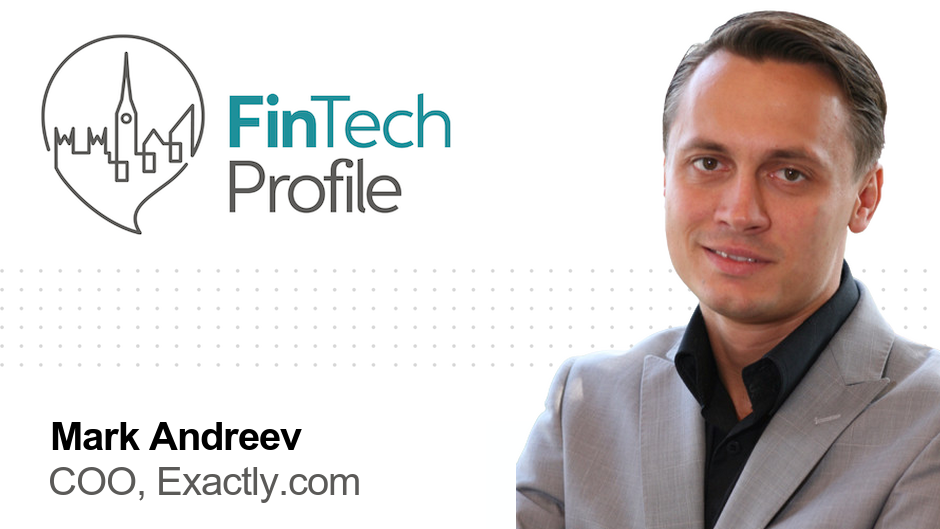
Today we're delighted to speak with Mark Andreev, Chief Operating Officer at Exactly.com, a UK-based direct card acquirer challenging the status quo in payment processing. With a career spanning two decades from pioneering chip-and-PIN programmes to building profitable acquiring divisions, Mark shares his vision for a FinTech sector built on transparency, fair pricing, and genuine human support for businesses of all sizes.
My questions are in bold - over to you Mark:
Who are you and what's your background?
My career began in 2002, working in a bank's card-payments division. I helped launch some of the first chip-and-PIN programs, a major shift from magnetic stripes that required extensive customer education on security. Fraud prevention quickly became a focus, and I gained hands-on experience identifying risks like fake PIN pads and training teams to spot them.
During my time as Head of Acquiring, I turned the bank's online payments arm from a small, loss-making pilot into a profitable, standalone business. Growth was driven by the boom in cross-border trade, as international merchants demanded dependable online payment solutions. This role gave me a unique vantage point on the rise of e-commerce and the FinTech infrastructure that powers it today.
Now, at Exactly.com, I drive business strategy and execution, enabling UK companies to expand locally and internationally without increasing overheads. Those early career lessons instilled a core belief: every business should have access to fair treatment, transparent pricing, reliable infrastructure and genuine human support. This principle continues to shape everything I do.
What is your job title and what are your general responsibilities?
I'm Chief Operating Officer at Exactly.com. My role is all about turning strategy into action, overseeing operations, driving growth initiatives and ensuring our payment solutions deliver real value for businesses. I focus on helping merchants expand locally and internationally while keeping costs under control, and I work closely with our teams to make sure technology and human support go hand in hand.
Can you give us an overview of your business?
Exactly.com is a UK-based direct card acquirer and global payment provider built for online businesses of all sizes. We deliver a complete payment ecosystem, from card processing with Visa, Mastercard and to alternative methods like Apple Pay, Google Pay and Open Banking, as well as local payment methods across the globe. Our infrastructure is developed in-house, including a secure payment gateway, advanced fraud prevention, chargeback management and an intuitive merchant dashboard, ensuring a seamless end-to-end experience.
With coverage spanning major global and local currencies and 40+ languages, Exactly.com offers intelligent payment routing, personalised settlement cycles, and easy integration via hosted pages or API. We help businesses scale locally and internationally without inflating costs. There are no monthly platform fees, no additional fraud fees and no minimum turnover required to get started, making Exactly.com accessible for growing and established merchants alike.
Protection is built into the platform, with 3D Secure, PCI compliance, machine learning and manual checks to reduce both criminal and friendly fraud.
Merchants consistently value our transparent pricing, robust infrastructure, and human-first approach. Every business, regardless of size, benefits from fair fees, clear terms and hands-on support, because transparent pricing shouldn't be a privilege. Smaller businesses value the ability to scale without hidden costs, while larger enterprises rely on the same consistency, global reach and reliability to grow with confidence.
At Exactly.com we are rewriting the FinTech rulebook: smart technology, real human support and a level playing field for every business.
Tell us how you are funded?
Exactly.com is independently owned and operates without external investment. This gives us full control over our operations, pricing and long‑term strategy, ensuring we stay aligned with UK merchants' needs rather than investor priorities.
What's the origin story? Why did you start the company? To solve what problems?
We founded Exactly.com after identifying a clear gap in the FinTech market. Smaller UK businesses were often underserved by larger payment providers, facing high fees, slow onboarding and generic support.
Our mission is to provide inclusive payment support with transparent pricing for every business, regardless of size. By removing unnecessary complexity and focusing on fairness, we help SMEs scale sustainably, earning their loyalty through real support rather than restrictive pricing models.
Who are your target customers? What's your revenue model?
Our target customers are online businesses of all sizes; from micro and SME merchants to large e-commerce platforms, who want to scale locally and globally without increasing costs. We work with retailers, subscription-based businesses, digital service providers and travel businesses such as online travel agencies, hospitality providers and car rental platforms, all of which require flexible, reliable payment solutions and seamless cross-border capability.
Our revenue model is straightforward: we operate as a direct card acquirer and payment processor, earning through transparent transaction fees rather than complex or hidden charges. There are no tiered "pay-more, get-more" models. Every client receives the same high-level support and technology.
A good example is Cards2Cash, a UK-based platform for selling unused gift cards. We onboarded them quickly, handled all compliance requirements, and added Apple Pay and Google Pay to improve checkout. We also helped set up an EU entity to support expansion. These strategic changes cut processing fees by 30-40% and reduced overall costs by 27%, giving them a tangible competitive advantage.
As one client put it: "Exactly.com didn't just give us a payment gateway, they gave us a growth strategy. Lower fees and better support have transformed our margins."
If you had a magic wand, what one thing would you change in the banking and/or FinTech sector?
If I had a magic wand, I would eliminate the lack of transparency and complexity that still dominates much of the banking and FinTech sector. Too many businesses, especially SMEs, are burdened by opaque pricing, hidden fees and limited access to human, expert support. This adds layers of complexity that slow operations, erode profitability and ultimately stifle innovation.
Payments should empower growth, not add cost and confusion. I'd love to see an industry standard where every provider offers clear, fair pricing, proactive support and simplified integration as the norm - not the exception. Removing these blockers would level the playing field, allowing businesses of all sizes to scale confidently and sustainably.
What is your message for the larger players in the Financial Services marketplace?
My message to the CEOs and CIOs of the largest banks and financial institutions is this: Scale should not come at the expense of service, transparency or innovation. The future of payments is not just about speed and automation; it's about inclusivity and trust. In five years, AI and data-driven tools will make global payments smarter and more cost-efficient, but the real question is: who benefits?
Today, large enterprises enjoy tailored solutions, while SMEs - the backbone of the economy - still face high fees, slow support and unnecessary complexity.
Financial players have the influence to change this dynamic. By using their scale wisely, they can create a marketplace where fair pricing and proactive support are standard, and integration is simple rather than burdensome. Instead of relying on layers of intermediaries, they can prioritise direct connections and view payments not as a back-office necessity but as a strategic lever for growth. In this vision, checkout experiences are seamless, local payment options are readily available and fraud controls are driven by data. This makes these essentials part of everyday operations rather than rare exceptions.
I don't believe technology alone is enough. Automation needs to be paired with human expertise- people who can act quickly, solve problems and guide merchants toward real growth. If the biggest players lead with transparency, simplicity, and genuine care, we can turn today's friction into sustainable progress. That's the future I want to see, and it's exactly what we're building at Exactly.com.
Where do you get your Financial Services/FinTech industry news from?
I follow a mix of UK and global sources. The Payments Association, alongside leading FinTech publications such as The Paypers, The Fintech Times, Finextra and Financial IT, are key to staying up to date with developments across the payments and FinTech sector. I also track updates from the key sectors we operate in, including e-commerce and retail, where publications like A1 Retail, Retail Week, Retail Touchpoints and others are fundamental. I also keep up with broader business outlets, such as Business Reporter, Entrepreneur and vertical-specific sources like ABTA for travel. It's a useful combination of retail trends, payments insights and broader economic analysis relevant to the UK market.
Can you list 3 people you rate from the FinTech and/or Financial Services sector that we should be following on LinkedIn, and why?
A few voices in the FinTech and financial services sector really stand out for their insights. Dwayne Gefferie shares sharp perspectives on payments, banking and strategy, and he frequently engages with other key experts in the industry, which makes his posts particularly valuable. I also follow Marcel van Oost, who provides practical updates and thought leadership on banking, payments and FinTech innovation. Marcel's content is a great way to understand both strategic and operational trends in the sector.
What FinTech services (and/or apps) do you personally use?
Overall, I look for FinTech solutions that prioritise usability and transparency. Some UK-specific examples are particularly useful because they support local payment methods while operating seamlessly across borders. Revolut and Monzo are great examples of this, as both make international transactions straightforward and easy. More broadly, I tend to favour services that reflect the same high level of support and reliability that we provide at Exactly.com and strive to deliver to our customers.
What's the best new FinTech product or service you've seen recently?
One of the most interesting developments I've seen recently is 'Click to Pay'. It's a simple, practical solution that makes online payments faster and reduces friction. I'm also excited by the potential for UK-based local payment methods (LPMs). At the moment, Mastercard and Visa dominate as US-based payment rails, but with global uncertainty, LPMs could make regional transactions smoother and reduce reliance on rails that may fluctuate.
On the innovation front, embedding AI into checkout and banking interfaces also has huge potential. It can personalise the customer experience, offer instant support and strengthen fraud detection, making payments faster and more seamless for users.
Finally, let's talk predictions. What trends do you think are going to define the next few years in the FinTech sector?
Over the next few years, I expect FinTech to move from incremental innovation toward more meaningful structural change. Change is likely to come through several related developments enabled by technology maturity, user expectations rise, and payments and financial services become more closely integrated with commerce platforms.
In 2026, advances in AI and large language models are improving fraud detection, compliance efficiency and customer onboarding, making it more viable to serve smaller merchants and previously underserved markets. At the same time, major platforms are increasingly embedding financial services into everyday digital experiences - illustrated by moves such as social and commerce platforms pursuing financial services licences in markets like Brazil - signalling a shift toward a more omnichannel financial ecosystem.
Within that ecosystem, crypto and blockchain‑based infrastructure continue to play a role, particularly in underbanked regions, by offering alternative rails for low‑cost and cross‑border transactions. While not a universal solution, these technologies are becoming part of a broader toolkit focused on accessibility and interoperability. 2026 could be a decisive year in laying the groundwork for more inclusive payment systems, especially for micro‑businesses and SMEs, even if gaps with large enterprises persist.
In an era increasingly shaped by automation, I believe a human‑centric approach will become a key differentiator for FinTech providers. As technology handles more of the complexity in the background, expert human support, judgement and partnership will be critical in helping merchants translate efficiency gains into real revenue and performance improvements, particularly for smaller and growing businesses.
I also think Open Banking and Open Finance will face their most important test yet. While adoption continues to grow and trust in its security model is well established, the market is moving rapidly toward one‑click purchases and seamless, near‑instant payment experiences. In its current form, Open Banking often introduces additional steps into the checkout journey rather than removing friction, which can limit its effectiveness in conversion‑driven environments.
The opportunity lies in how Open Banking evolves, through improved UX, smarter orchestration and closer integration with embedded finance, so that its strengths in transparency and security can coexist with the speed and simplicity users now expect. Regulatory alignment and interoperability will be decisive in determining whether Open Banking becomes a core payment layer or remains a complementary option.
Ultimately, I believe the FinTech trends shaping the coming years will centre on speed, transparency and accessibility, delivered within increasingly integrated ecosystems. Those that embrace innovation while maintaining trust, compliance and genuinely user‑centric design will lead the way - transforming payments from a back‑office function into a strategic driver of growth.
Thank you Mark for taking the time to share your insights with us. Learn more about Mark's company at Exactly.com.